
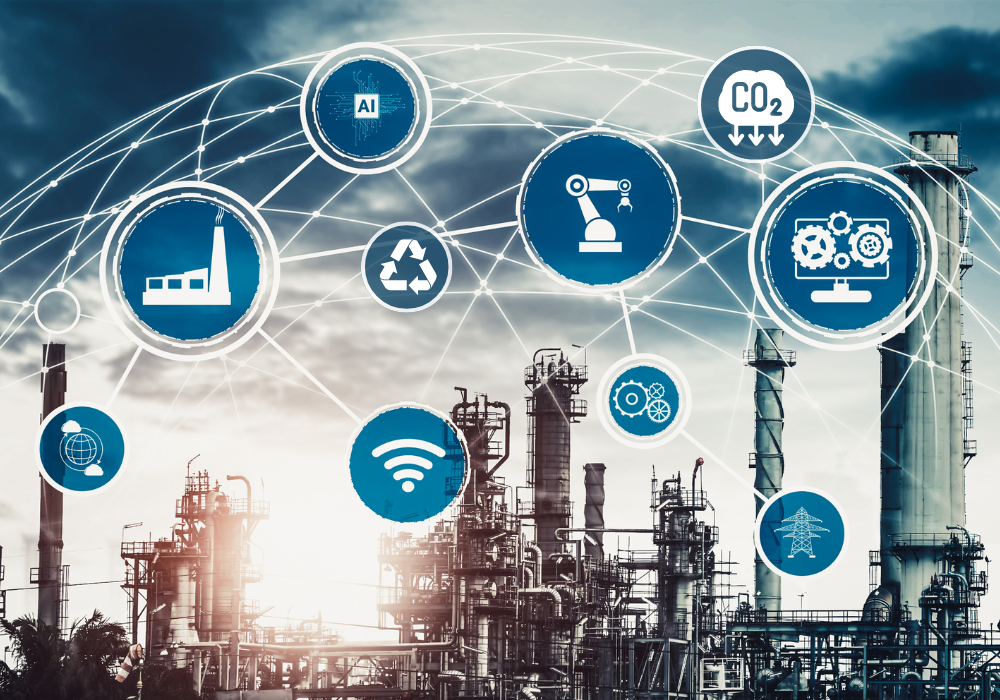
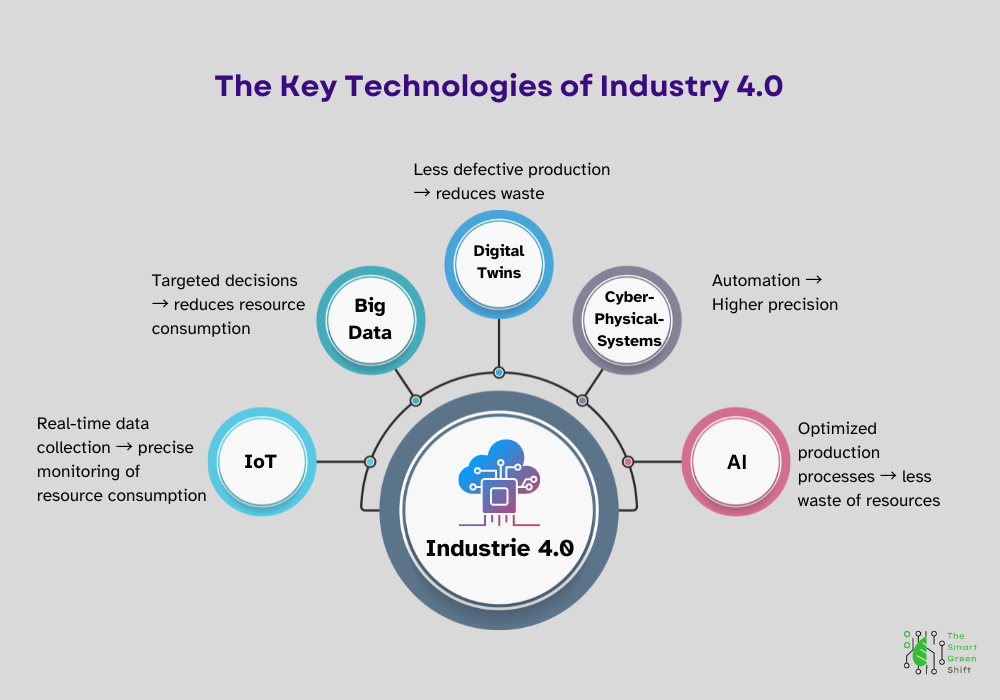
The advancing digitalization of industry is changing the way companies produce, use resources, and design value chains. This transformation is based on the integration of technologies such as the Internet of Things (IoT), artificial intelligence (AI), big data, and cyber-physical systems (CPS), which enable the networking and automation of production processes. It is the fourth industrial revolution, also known as “Industry 4.0.” At the same time, the optimization of resource utilization and efficiency is gaining importance in industry. This is done, on the one hand, to increase value creation and maximize profits, and, on the other hand, to meet sustainability requirements that are increasingly demanded by customers as well as by legal and regulatory requirements. This article provides an insight into key developments in Industry 4.0 and shows how they influence sustainability in production.
Historical Context of the Industrial Revolutions
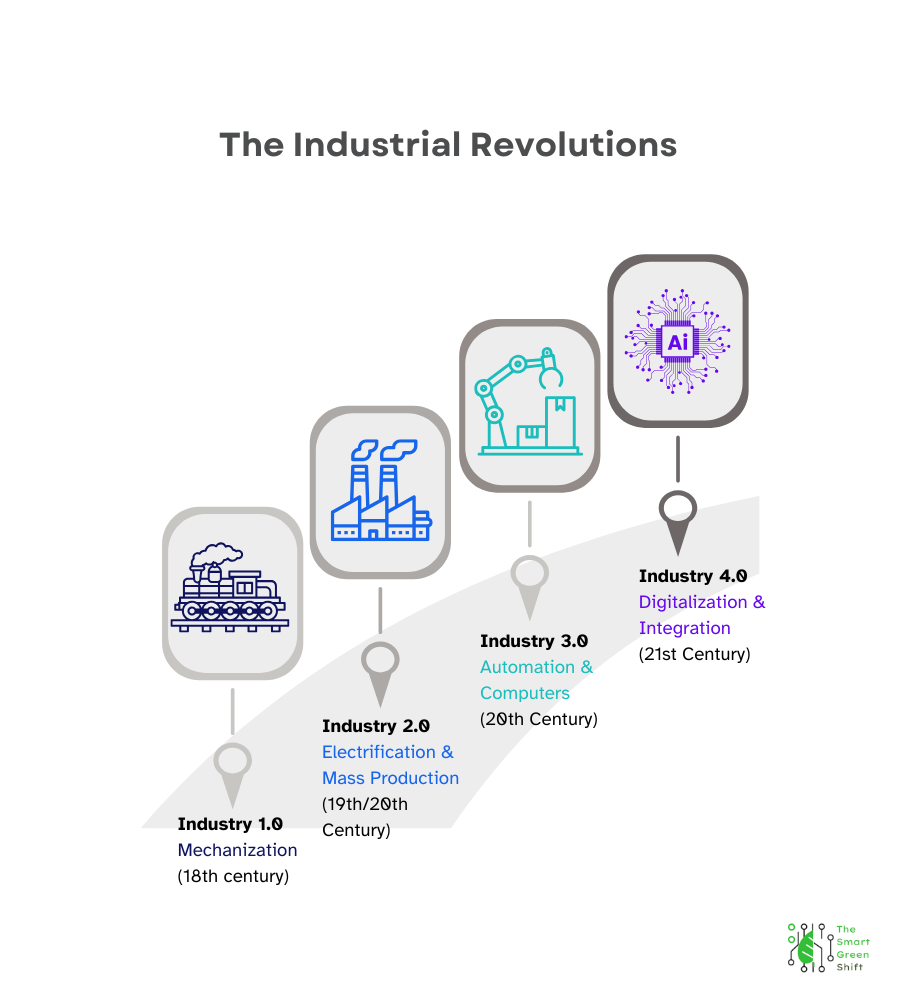
The current development of Industry 4.0 is part of a series of technological upheavals that have fundamentally changed production. The first industrial revolution began at the end of the 18th century with mechanization through water and steam power, which replaced manual labor. The second followed at the end of the 19th century with the introduction of electricity and assembly lines, which enabled mass production. In the mid-20th century, the third revolution ushered in automation through electronics and information technology, making manufacturing processes more precise and efficient. Industry 4.0 now marks the transition to networked, data-driven systems that enable intelligent and flexible production. This historical context shows how each phase redefined resource utilization and efficiency—an aspect that is closely linked to sustainability in the fourth revolution.
Technological Foundations and Their Contribution to Resource Efficiency
The foundation of Industry 4.0 lies in the ability to capture, analyze, and respond to data in real time. Sensors on machines and systems continuously collect information about energy consumption, material flows, and operating conditions. This data is stored in cloud systems and evaluated using AI algorithms to optimize processes. One example is predictive maintenance, which predicts failures in production equipment and carries out repairs in a targeted manner. This reduces the need for spare parts and unplanned downtime, improving material consumption and energy efficiency. Likewise, the networking of production systems enables more precise control of manufacturing processes, reducing waste and making the use of raw materials more efficient. Companies like Siemens have already implemented such approaches in their digital factories to measurably reduce resource consumption.
Another aspect is the flexibilization of production. By using digital twins – virtual replicas of physical systems – processes can be simulated and optimized before they are implemented in the real world. This reduces test runs and defective production, which in turn minimizes energy and material consumption. The ability to produce smaller batch sizes economically also supports demand-oriented manufacturing, which avoids overproduction. A concrete example is the automotive supplier Bosch, which uses digital twins to optimize the production of components such as fuel injectors and thus save resources. These technological approaches demonstrate that Industry 4.0 not only increases productivity but also offers potential for conserving resources.
Energy consumption and decarbonization in the smart factory
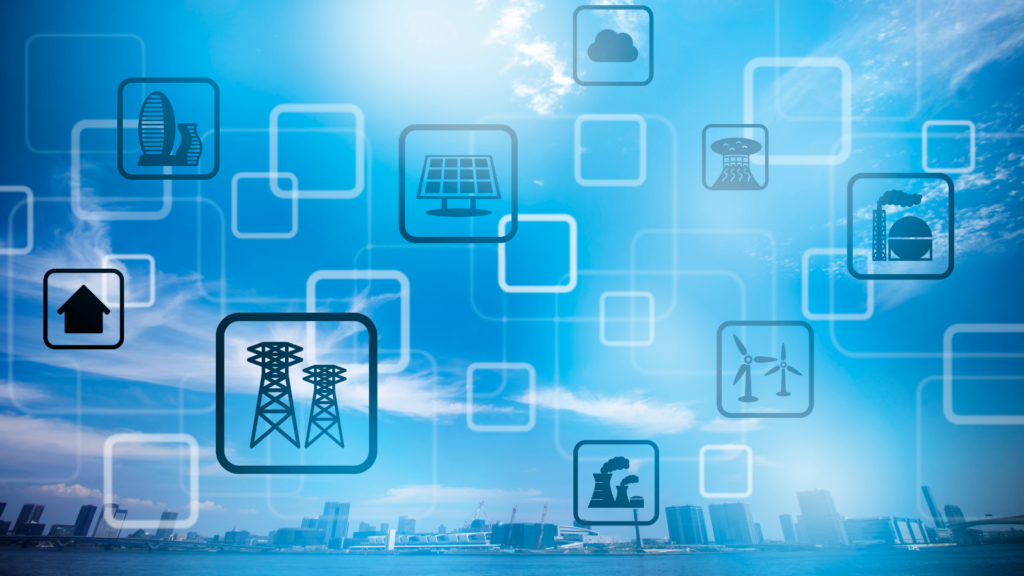
A key factor for sustainability in industry is energy consumption. Smart factories use IoT-supported systems (more on IoT technology here) to monitor and control the energy requirements of individual machines and entire production lines. By analyzing consumption data, companies can avoid peak loads and adapt operations to times of high renewable energy availability. One example of this is the integration of smart grids. These intelligent power grids connect production systems with the energy supplier and enable dynamic adjustment of consumption to fluctuations in the electricity supply, for example, when wind or solar energy is available. This allows energy demand to be specifically shifted to phases with lower CO₂ emissions in the electricity mix. Studies by the Fraunhofer Institute show that such measures can reduce energy consumption in production by up to 20%, depending on the industry and the technologies used.
Digital developments also open up new opportunities for decarbonization. Precise process control and the use of data-driven optimization can reduce CO₂ emissions, particularly in energy-intensive sectors such as the steel and chemical industries. Companies like Thyssenkrupp have been experimenting with digital solutions to replace the use of fossil fuels with hydrogen technologies for some time, with Industry 4.0 technologies increasing the efficiency of this transition. The ability to measure and analyze emissions in real time also supports compliance with stricter environmental regulations and enables transparent reporting.
Circular Economy and Materials Management
Another area in which Industry 4.0 can contribute to greater sustainability is the circular economy. Digitalization enables seamless traceability of materials along the entire value chain. RFID tags, small radio-frequency tags that transmit data wirelessly, and blockchain technology, a decentralized system for secure data linking (more on blockchain here), allow companies to document the life cycle of products and raw materials. This facilitates reuse and recycling: Circularise, a Dutch startup, has developed a blockchain-based platform to create transparency in the supply chain, particularly in the plastics industry. The goal is to track the entire life cycle of plastics – from raw material extraction and production to reuse or recycling. They use digital product passports that contain information such as material composition, origin, and processing steps. This data is stored in a blockchain to ensure it is tamper-proof, transparent, and accessible to all relevant stakeholders.
This technology is also already being used in the automotive industry to efficiently return components from end-of-life vehicles to the production cycle. The data-based analysis of material flows also helps identify weak points in the supply chain and minimize the use of new raw materials.
Additive manufacturing, better known as 3D printing, also plays a role here. This technology allows components to be built layer by layer, significantly reducing material waste compared to traditional processes. Another major advantage is that spare parts can be produced on-site when needed, shortening transport routes and reducing the associated emissions. Companies like General Electric are already using this method to manufacture complex components with fewer resources.
Challenges and Limitations of Digitalization
Despite the aforementioned advantages, which are undoubtedly brought about by rapid developments in digitalization, there are also challenges. Economically, the implementation of Industry 4.0 technologies requires significant investments in hardware, software, expertise, and employee training. Small and medium-sized enterprises in particular could quickly reach their financial limits. In addition, networking increases the energy consumption of the IT infrastructure itself, for example, servers and data centers, which can partially mitigate the positive impact on sustainability. A study by the International Energy Agency (IEA) estimates that global data traffic could triple by 2030, correspondingly increasing the energy demand of digital infrastructure.
Another critical issue is the dependence on critical raw materials such as rare earths, which are needed to manufacture sensors and electronics. The extraction of these materials is often associated with high environmental impacts and questionable working conditions, which could call into question the sustainability of the technologies themselves (here is an interesting article on this topic). Furthermore, interconnectedness significantly increases the vulnerability of digital systems. Cyberattacks can disrupt production processes and compromise sensitive data, which is why investments in cybersecurity play a key role. Further developments in materials research, recycling, and IT security are therefore required to address these challenges.
Data-driven perspectives for industry
With Industry 4.0, we are currently witnessing a new chapter in human history, exciting and full of opportunities and challenges. Advancing digitalization is opening up new ways for industry to design production processes. Data forms the basis for targeted improvements in efficiency and resource utilization. It is crucial to adapt the available tools to their specific requirements, taking both economic and ecological aspects into account. The coming years will show how these developments will continue to scale and what new solutions will emerge.
Sources:
Bosch: Digital Twins – A Bridge Between the Physical and Virtual Worlds. From: https://blog.bosch-digital.com/digital-twins-a-bridge-between-the-physical-and-virtual-worlds/ Retrieved: 04 April 2025
Circularise: Plastics traceability with digital product passports. From: https://www.circularise.com/industry/plastics Retrieved: 04 April 2025
Fraunhofer ISE: Fraunhofer ISE Supports Energy-Intensive Industries in Identifying Energy-Saving Potential. From: https://www.ise.fraunhofer.de/en/press-media/press-releases/2022/fraunhofer-ise-supports-energy-intensive-industries-in-identifying-energy-saving-potential.html Retrieved: 04 April 2025
Thyssen Krupp: Pressrelease: Grüner Wasserstoff: thyssenkrupp erweitert Fertigungskapazitäten für Wasserelektrolyse auf Gigawatt-Maßstab.From: https://www.thyssenkrupp-industrial-solutions.com/de/media/pressemitteilungen/thyssenkrupp-erweitert-fertigung-fuer-wasserelektrolyse-anlagen Retrieved: 04 April 2025
SAP: Industry-4.0-Solutions. From: https://www.sap.com/products/scm/industry-4-0.html Retrieved: 04 April 2025