
In an increasingly sustainability-conscious society, companies are under pressure to implement sustainable practices and communicate them credibly. Unfortunately, it is becoming clear again and again that there are significant discrepancies between the promises made by companies and reality. Greenwashing – the pretense of environmental friendliness – is a common problem, especially in complex supply chains, which has not yet been really solved. Although regulations, such as the CSRD (Corporate Sustainability Reporting Directive, a regulation that requires companies to disclose their non-financial activities) that has just been introduced in the EU, aim to promote real sustainability, they still exist, especially along complex global supply chains Opportunities for greenwashing. Blockchain technology could play a crucial role here and revolutionize the effective prevention of greenwashing and the creation of transparency.
What is Blockchain?
The blockchain is a decentralized, digital database that stores information in a chain of blocks. Each block contains a series of records that are linked together using cryptographic methods. Once stored, information can no longer be changed or deleted, which makes the blockchain particularly secure and resistant to manipulation.
Unlike traditional centralized databases, blockchain operates across a network of computers, each of which has a copy of the entire database. Transactions or changes to the blockchain are validated through consensus mechanisms such as Proof of Work or Proof of Stake. These properties make blockchain ideal for maintaining trustworthy, transparent and traceable records – which is exactly what is crucial for supply chain challenges.
Why are supply chains particularly vulnerable to greenwashing?
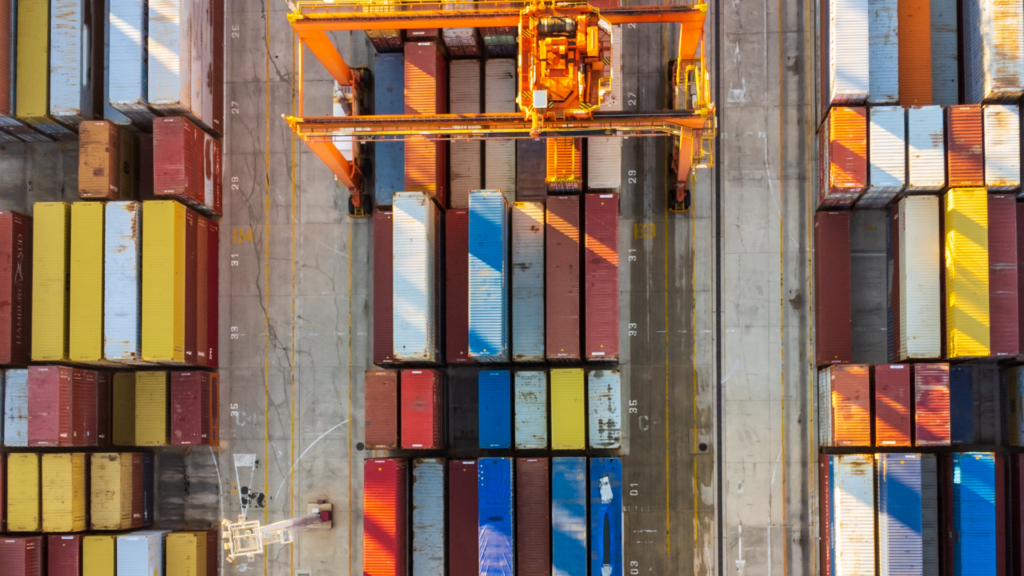
Supply chains are often global, complex and opaque. Raw materials are extracted in one country, processed in another and finally assembled into a finished product in a third country,
all of this usually carried out by different suppliers and sub-suppliers. This multi-step process brings with it numerous challenges that make greenwashing easy.
First, companies often have limited insight into the practices of their suppliers or subcontractors. When for example, a textile manufacturer claims that its cotton is sustainably grown, it can be difficult to verify that this is actually the case. Companies often rely on certificates or reports that are not always independently verified or can be easily manipulated. On the other hand, many countries that play a key role in global supply chains lack strict environmental or labor standards. This increases the risk that unethical practices will be concealed.
Another factor is market pressure. Consumers and investors increasingly expect sustainable products, which leads companies to make sustainability promises that they cannot always keep. Without a way to verify these promises, greenwashing often goes undetected.
How blockchain technology can minimize greenwashing
The blockchain offers a transparent and tamper-proof platform to document the origin and sustainability criteria of products along the entire supply chain! By recording every transaction and every processing step on the blockchain, an immutable record is created that can be viewed by everyone involved.
As an example, a coffee farmer in Colombia can enter information about the organic cultivation of his beans in the blockchain. This data is supplemented at every further step – from processing to transport to sale. Consumers can easily track this information later and check whether the coffee was actually produced under the specified conditions. Since the blockchain is decentralized, no single party can manipulate or delete the data, which significantly strengthens credibility.
In addition, blockchain enables the use of smart contracts – automated programs that can monitor and trigger certain conditions. For example, if a supplier loses a certification or fails to meet set sustainability standards, a smart contract could automatically trigger an alert or block trade with that supplier.
A transparent future with blockchain?
Integrating blockchain technology into supply chains is not an easy process, but it holds enormous potential. It requires collaboration between companies, suppliers, technology providers and regulators. Nevertheless, it could be a decisive turning point in the fight against greenwashing.

Consumers gain more trust when they can verify the origin and sustainability of a product themselves. In the long term, companies benefit from a stronger reputation and lower risks of regulatory penalties or scandals.
However, blockchain technology still poses a number of hurdles. Integrating blockchain technology is complicated because it requires profound technical, organizational and legal changes. Companies would have to modernize systems, redefine processes and open their entire supply chain to more transparency, but especially in the latter case, not everyone involved in a supply chain is necessarily interested in more transparency.
Blockchain is a technological innovation and has the potential to be a tool that could fundamentally change the way we think about transparency and sustainability. By exposing and preventing greenwashing, it can play a key role in creating a more sustainable and responsible economy. However, the technology is still in its early stages and the right conditions would still have to be created for widespread use in companies with the aim of creating more transparency. It will therefore be exciting to continue to observe developments.
Sources:
IBM. What is blockchain? From: https://www.ibm.com/topics/blockchain Retrieved: December 28, 2024
McKinsey & Company. What is blockchain? From: https://www.mckinsey.com/featured-insights/mckinsey-explainers/what-is-blockchain Retrieved: December 28, 2024
BMWK. Nachhaltigkeit im Kontext der Blockchain-Technologie. From: https://www.bmwk.de/Redaktion/DE/Publikationen/Digitale-Welt/blockchain-nachhaltigkeit.pdf?__blob=publicationFile&v=4 Retrieved: December 28, 2024


Your way of telling everything in this paragraph is in fact nice,
all be able to simply understand it, Thanks a lot.
Thanks, glad you like it!