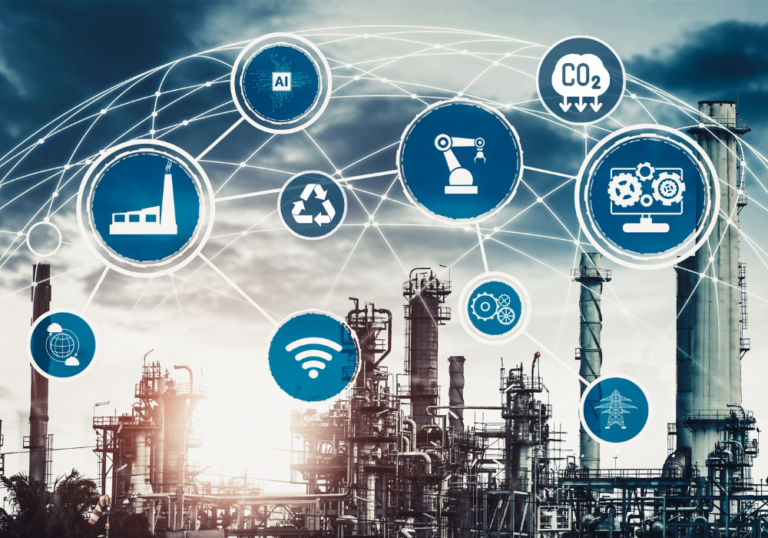


In recent decades, digitalization has fundamentally changed the way we live and work. One of the most significant technological innovations is the so-called Internet of Things (IoT). But what exactly is the IoT and how can it help create a more sustainable world? At first glance, the two areas seem to have little to do with each other, but a deeper look shows that the IoT has enormous potential to achieve sustainable goals and revolutionize the way we use resources.
This article takes a look at the concept of the IoT and how it can contribute to sustainability, but also addresses the downsides and risks associated with the IoT.

What is the Internet of Things (IoT)?
The Internet of Things (IoT) describes the networking of physical objects, devices and machines – things – that are connected to the Internet via sensors, software and other technologies in order to exchange and analyze data. This enables these objects to communicate with each other, collect and exchange data and carry out actions independently. These objects can be everyday items such as thermostats, cars or household appliances, but also industrial machines, agricultural equipment or urban infrastructure. The aim of the IoT is to automate processes, use resources more efficiently and improve decisions through data analysis. A simple example is a smart thermostat that adjusts the temperature in a room based on the habits of the residents. Other applications can be found in smart household appliances, connected cars or sensors in agriculture.
The technical basis of the IoT is sensors, actuators and network technologies. Sensors record physical data such as temperature, humidity or movement.
This information is then sent via networks to a central platform where it is analyzed. Based on these analyses, actuators can carry out certain actions, such as switching devices or triggering alarms. The aim is to automate processes, make them more efficient and reduce human intervention to a minimum.

The rapid development of IoT technologies is driven by advances in sensor technology, wireless communication and data processing. At the same time, the increasing use of IoT applications is leading to the emergence of new application areas, many of which have the potential to support sustainable practices.
Where does IoT come into play in sustainability?
Sustainability encompasses environmental, social and economic aspects. The overarching goal is to use resources in a way that meets the needs of the current generation without compromising the livelihoods of future generations. This is where IoT can play a key role by helping to use resources more efficiently, reduce emissions and waste, and implement more environmentally friendly processes. Below are some interesting examples that show how IoT can contribute to sustainability.
Smart energy systems
One of the most significant contributions of IoT to sustainability is energy savings. Connected electricity meters and smart energy management systems can monitor and optimize energy consumption in real time and make it possible to precisely match energy flows to demand, avoid power outages, and increase the share of renewable energy.

They analyze data to avoid power peaks and better integrate renewable energy such as solar or wind power. In an intelligent power grid – a so-called smart grid – the IoT can help to make the energy supply more stable and environmentally friendly.
A concrete example is the use of IoT sensors in solar systems. The sensors record weather data and the efficiency of the solar modules in order to maximize the electricity yield. At the same time, such systems can analyze energy consumption in households and make suggestions for optimization, for example by shifting energy-intensive processes to times of high energy availability. These technologies not only reduce electricity costs, but also dependence on fossil fuels.
Smart agriculture for sustainable food production
Another area where IoT plays a crucial role is agriculture. With the world’s growing population and increasing resource consumption, sustainable food production is more important than ever. IoT-based solutions can make significant progress here through precise and data-based decision-making.
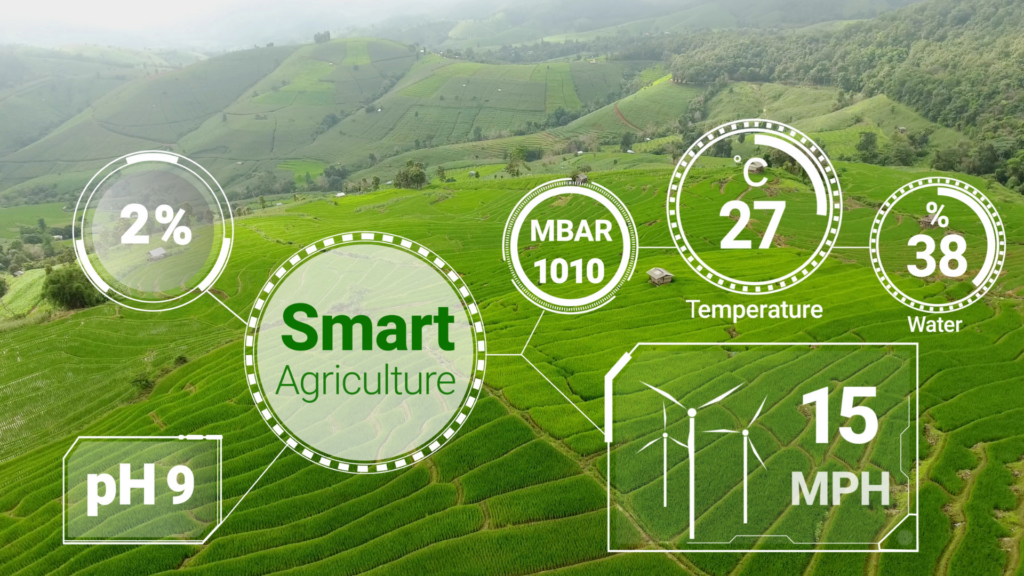
One example of the application of IoT in agriculture is precision irrigation. Using soil moisture sensors and weather data, the water requirements of plants can be determined precisely. This technology reduces water waste while ensuring that plants are optimally supplied. Likewise, IoT systems can control the use of fertilizers and pesticides by analyzing the condition of the soil and plants. The result is higher yields with fewer resources and a reduction in environmentally harmful substances.
A practical example is the Dutch company “Priva”, which uses IoT technologies in greenhouses to optimize climate, lighting and nutrient supply. This type of automated agriculture reduces energy consumption, minimizes water requirements and maximizes productivity at the same time.
Optimizations in logistics
The IoT also ensures more efficient use of resources in logistics. Networked sensors in warehouses and vehicles can optimize transport by adjusting delivery routes and minimizing fuel consumption. This is particularly relevant because the transport sector accounts for a significant proportion of global emissions.

The Internet of Things (IoT) is revolutionizing the logistics industry and making a decisive contribution to greater sustainability. Sensors and networked devices enable precise monitoring of transport routes, storage conditions and vehicles in real time. This enables companies to make their supply chains more efficient, conserve resources and reduce CO₂ emissions.
A practical example is the optimization of transport routes through IoT-supported route planning. Networked trucks use sensors and GPS data to avoid traffic jams or unfavorable weather conditions. This saves fuel and reduces emissions. Likewise, real-time monitoring of cold chains enables constant monitoring of the temperature of sensitive goods. This minimizes waste from spoiled food, as is already being successfully implemented by companies such as DHL.
In addition, the IoT also promotes the sustainable use of storage capacity. Intelligent warehouse management systems analyze data to optimize space utilization and reduce energy consumption. Companies like Amazon are using this technology to reduce their carbon footprint.
Integrating IoT into the logistics industry not only increases efficiency, but also makes an important contribution to sustainability by conserving resources and reducing emissions.
IoT in urban sustainability
Cities face particular challenges when it comes to sustainability. Population growth, traffic problems and air pollution are just some of the issues that need to be addressed. Here, too, IoT offers numerous opportunities to make cities smarter and more sustainable.
The transport sector is one of the main sources of greenhouse gas emissions. Here, IoT offers innovative opportunities to make mobility more sustainable. Intelligent transport systems based on IoT technologies can improve traffic flow, reduce fuel consumption and make public transport more attractive. A key aspect is real-time traffic monitoring. IoT sensors and cameras collect data on traffic volumes, road conditions and weather conditions. This information is analyzed to direct traffic flows, reduce congestion and suggest alternative routes. At the same time, connected vehicles can communicate with each other to comply with social distancing rules and drive more efficiently.

One outstanding example is the city of Singapore, which has implemented an IoT-based traffic management system. Smart toll systems and real-time information for commuters have significantly reduced congestion and improved air quality. Such approaches show how the IoT can help make urban mobility more sustainable.
In the field of lighting, smart street lights can reduce energy consumption. These lights automatically adjust their brightness to the ambient conditions and can report broken lamps. This can significantly reduce electricity and maintenance costs.
In addition, connected water and wastewater systems can help optimize resource use in cities. Sensors in pipes can detect leaks and initiate immediate repairs. This not only prevents water waste but also saves costs.
Another example is smart waste management. Sensors in garbage containers can monitor fill levels and automatically plan collection routes to avoid empty containers and reduce the fuel consumption of waste disposal vehicles. In urban areas, smart city initiatives can equip street lights with motion detectors that are only activated when they are needed. This saves energy and reduces costs.
The dark side of IoT: security and privacy issues
Despite its enormous benefits, IoT is not without risks. One of the most serious problems is cybersecurity. Since IoT devices are often operated in large numbers and with different software, they are vulnerable to hacker attacks. A prominent case was the Mirai botnet attack in 2016, in which millions of IoT devices were hacked and used to paralyze large parts of the Internet. Such attacks could also affect critical infrastructure such as power grids or water supply systems in the future, and the negative consequences would be immense.
Another problem is data protection. IoT devices collect huge amounts of data about their users, from fitness tracker data to information about heating behavior in homes. This data is often poorly secured and can easily fall into the hands of third parties, whether through data leaks or inadequate encryption. Misuse of this data could have significant consequences, from financial losses to invasion of privacy.

Further challenges
In addition to the security risks, there are a whole range of other challenges in implementing IoT solutions to promote sustainability. A major hurdle is the necessary infrastructure. Many IoT applications require dense network coverage and powerful data transmission technologies such as 5G. In rural areas, for example in Germany, or generally in less developed countries, this is often not the case.
Further, the energy consumption of the IoT devices themselves is a problem. Sensors and other hardware must be continuously supplied with power, which leads to considerable energy requirements for a large number of devices. The development of energy-efficient technologies and the use of renewable energy sources could be a step in the right direction here.
Another problem is standardization. Since the IoT is still a relatively young field, numerous different protocols and technologies exist. This makes it difficult to integrate systems and collaborate between different players. Uniform standards could help to overcome these hurdles.
Finally, the planned obsolescence of many IoT devices is a problem. Manufacturers tend to design devices in such a way that they are no longer supported or have to be replaced by new models after a few years. This leads to e-waste that pollutes the environment and is contrary to sustainability.
Paths to use IoT safely and sustainably
Despite these challenges, the potential of IoT for sustainability appears immense. As the technology continues to mature, the opportunities for sustainable applications will also grow. To drive this development, investment in research and development and close cooperation between companies, governments and academia are needed. To fully exploit the benefits of IoT while minimizing the risks, clear regulations and best practices are necessary. Manufacturers should be required to adhere to security standards, such as data encryption and regular software updates. At the same time, consumers must be better informed about the safe use of IoT devices.
At the political level, for example, initiatives to recycle IoT devices could be promoted to reduce e-waste. Companies that offer solutions for recycling old devices could receive tax incentives. At the same time, the focus should be on open standards to ensure compatibility between different systems and increase the longevity of devices.
A promising approach is also the use of technologies such as blockchain to improve security in the IoT. Blockchain can be used to authenticate and encrypt transactions between IoT devices, making tampering more difficult. In addition, the development of energy-efficient chips and sensors could help reduce the energy consumption of the IoT devices themselves and thus minimize their ecological footprint.
The Internet of Things has the potential to make our world more sustainable and efficient. But to realize this vision, the challenges associated with this technology must be taken seriously. The right strategies and a clear focus on long-term goals are needed; this is the only way IoT technologies can help shape a more sustainable future. The challenges that arise are certainly not insurmountable and should serve as an incentive to develop even more innovative and efficient solutions. The Internet of Things could therefore prove to be an important building block on the way to a resource-efficient future.

Sources:
National Geographic: Smart Cities. From: https://education.nationalgeographic.org/resource/smart-cities/?utm_source=chatgpt.com Retrieved: December 14, 2024
IEEE: Internet-of-Things (IoT)-Based Smart Agriculture: Toward Making the Fields Talk. From: https://ieeexplore.ieee.org/abstract/document/8784034 Retrieved: December 14, 2024
Security Insider: IoT-Angriffe bedrohen kritische Infrastrukturen. From: https://www.security-insider.de/-iot-geraete-sicherheitsrisiken-schutzmassnahmen-a-e930e7ab56645f6656abc55b3923295f/ Retrieved: December 14, 2024
ComputerWeekly: Die 12 wichtigsten IoT-Sicherheitsbedrohungen und -risiken.From: https://www.computerweekly.com/de/tipp/Die-fuenf-wichtigsten-IoT-Sicherheitsrisiken Retrieved: December 14, 2024
Radware: What is the Mirai Botnet? From: https://www.radware.com/security/ddos-knowledge-center/ddospedia/mirai/ Retrieved: December 14, 2024
Forbes: The IoT-Powered Logistics Industry: Use Cases, Benefits And Challenges. From: https://www.forbes.com/councils/forbestechcouncil/2023/02/21/the-iot-powered-logistics-industry-use-cases-benefits-and-challenges/ Retrieved: December 14, 2024
Fraunhofer Institut: Praxisbeispiele IoT. From: https://websites.fraunhofer.de/Lab-IoT/?p=676 Retrieved: December 14, 2024
Priva: Greenhouse Water Systems. From: https://www.priva.com/horticulture/solutions/greenhouse-water-systems Retrieved: December 14, 2024
Intellistride: How Singapore’s Smart Traffic System is Redefining Urban Mobility. From:https://www.intellistride.com/blog/how-singapores-smart-traffic-system-is-redefining-urban-mobility/ Retrieved: December 14, 2024